

How to Design a Luxury Outdoor Space
A great outdoor room rivals your interior in comfort, function, and design. For Costa del Sol villa owners and architects, this means balancing Mediterranean style with practical engineering. Shade systems, heating for shoulder seasons, carefully selected furniture, and thoughtful lighting transform your terrace from day entertaining to intimate evening retreats. This guide walks through professional design principles that make outdoor areas the heart of your home.

Start with Functional Zoning
Divide your outdoor area into three zones: dining, lounging, and cooking. Each serves distinct purposes and needs specific furniture and infrastructure. A dining zone needs a sturdy table (teak or powder-coated aluminium), comfortable seating, and shelter from wind. Lounging areas need shade, deep seating, and easy access to drinks. Cooking zones need strong work surfaces, proper ventilation, and proximity to dining. Professional layouts encourage traffic flow. Guests move naturally from aperitif lounging through cooking observation to the dining table. Avoid scattered, unclear arrangements. Anchor each zone with something distinctive: a sculptural parasol for dining, a quality kitchen for cooking, a daybed for lounging.

Shade Systems: Engineering Comfort
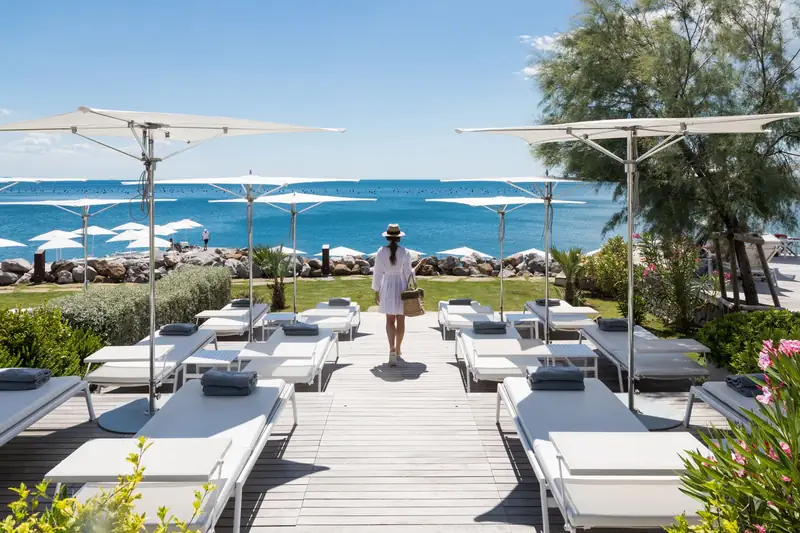
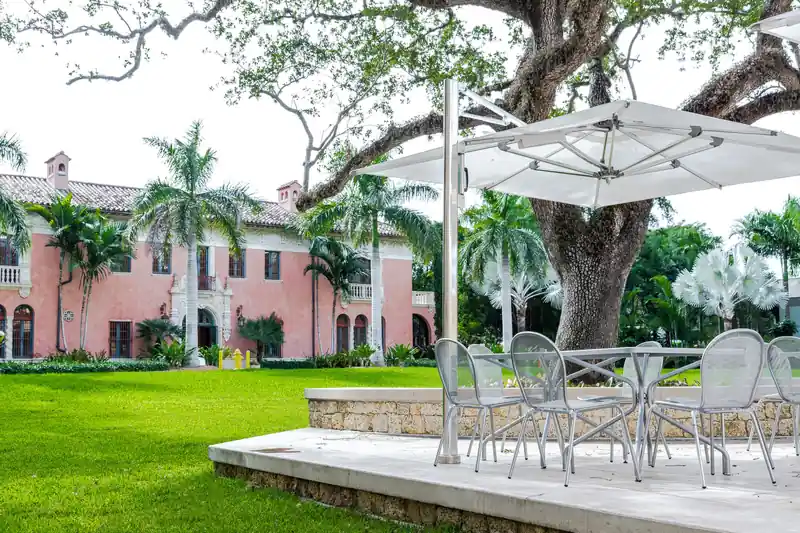
Shade is essential infrastructure in Mediterranean climates. Permanent structures like pergolas, loggias, and pavilions provide consistent protection. For flexibility, Tuuci’s large cantilever parasols (Ocean Master MAX) shade a dining table with no pole in the middle. Scolaro’s Galaxia collection opens and closes above the furniture with the help of a gas spring. Umbrosa’s Spectra closes horizontally, like a fan, against its pole. Layer your shade: a pergola overhead with strategically positioned parasols creates adjustable coverage and intimate zones. Position parasols at the edges rather than the centre so they don’t block views of the landscape or sea.

Furniture Layout & Circulation
Start with conversation groups where seating lets people face each other. Gloster teak collections work well here. Their proportions suit intimate clusters. Avoid theatre-style seating that prevents conversation. Position dining perpendicular to lounging areas to keep activities separate and avoid awkwardness. Create clear pathways that let guests move between zones without navigating around furniture. On larger terraces, create layered groupings: casual seating near the kitchen, a formal dining centrepiece, and an intimate daybed at the edge. This creates visual richness and flexibility. Balance visual weight. Heavy pieces like teak tables work well with lighter chairs or aluminium frames to avoid feeling bulky.

Heating for Extended Seasons
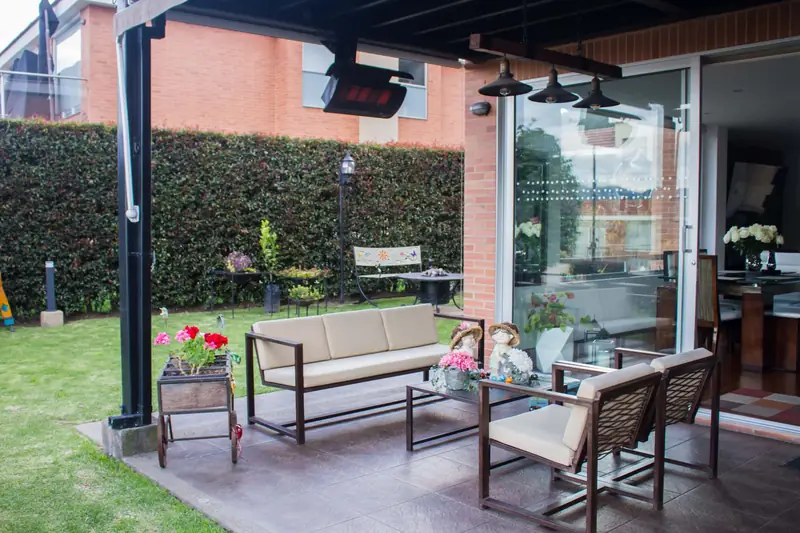
The Costa del Sol’s mild winter lets you entertain outdoors from September through June with proper heating. Bromic’s infrared systems deliver targeted warmth without heating the air. The Tungsten collection projects directional heat over a dining table. Ceiling-mounted Platinum options integrate with pergolas. Freestanding Eclipse models offer flexibility for seasonal repositioning. Infrared heating keeps guests comfortable on cool evenings. Position heaters above seating areas, not walkways.

Material Selection for Integrated Design
Luxury outdoor spaces use material consistency to feel deliberate rather than haphazard. If your kitchen is stainless steel, use the same for side tables and serving surfaces. If dining uses teak, extend that to pergola posts and screens. Gloster offers coordinated material palettes across collections. Kettal’s minimalist aluminium language extends through loungers, tables, and overhead structures. Use three complementary materials maximum. Too many materials create visual confusion.

Lighting Strategy: Day to Night Transformation
Professional outdoor lighting uses layers. Accent lighting highlights plants or architectural features and creates depth. Ambient lighting from path fixtures and pergola uplighting lets people navigate safely without glare. Task lighting over dining and cooking zones ensures function. Subtle accent lighting at the edges, narrow beams on water features or landscape, extends perceived space and creates intimacy. Avoid bright central lighting that flattens perspective and kills mood. Modern outdoor lighting integrates with smart systems so you can program transitions: bright during aperitif hours, dimmed during dinner, enhanced for evening entertaining.

Integration with Cooking & Entertainment
Mediterranean entertaining traditionally centres on food preparation and sharing. Whether you choose a Talenti TIKAL modular kitchen system (in linear, corner or peninsula layouts), a Big Green Egg for casual grilling, or a Napoleon gas BBQ for efficiency, position it as a focal point rather than hidden utility. TIKAL’s modular design includes sink, induction hob, barbecue, and storage in customizable arrangements. Ensure adequate counter space for prep and plating. Position the cooking area visible to the dining zone but not directly adjacent, so guests can watch food preparation without smoke and heat drifting into the eating space.

FAQ: Luxury Outdoor Design
What parasol size works for a 4x6m dining terrace?
A single 3 × 4 m cantilever parasol (a Scolaro Galaxia Astro, for example) covers the table and the seating around it. For more flexibility, try a dual parasol arrangement (two 3m squares) so you can adjust coverage as the sun moves.
Can I combine permanent shade (pergola) with retractable parasols?
Yes. This is standard professional practice. A pergola provides baseline shelter and architectural coherence, while strategically positioned parasols (Tuuci, Scolaro, Umbrosa) offer flexible coverage for seasonal and hourly adjustments. Layering shade increases usable hours and adds visual richness.
How do I transition outdoor heating from autumn to spring without visible infrastructure?
Ceiling-mounted Bromic systems (Platinum, Tungsten) integrate into pergola soffits or structure so they look built-in year-round but only operate seasonally. For terraces without overhead structure, use Bromic’s freestanding Eclipse models positioned at the edges and activated when needed. Smart controls let you program automatic activation at sunset during cool months.
Should outdoor furniture match indoor design language?
Outdoor furniture doesn’t need to copy interior style, but it should share design principles. If your interior is minimalist Scandinavian, Kettal’s clean aluminium works beautifully outdoors. If you prefer traditional Mediterranean warmth, Gloster’s teak collections feel natural. The transition zone matters, windows, doors, and sightlines benefit from material continuity. Use glass doors and hardscape that visually connect interior and exterior.