

Kamado vs Gas BBQ: Which Premium Cooking System Suits Your Villa?
The choice between a ceramic kamado grill and a gas barbecue defines your outdoor entertaining style, maintenance commitment, and culinary philosophy. Big Green Egg’s iconic ceramic design and Napoleon’s refined gas engineering represent two entirely different approaches to outdoor cooking. This guide compares versatility, temperature control, fuel efficiency, and practical considerations for Costa del Sol villa owners deciding between these premium systems.

The Kamado Advantage: Smoke, Grill, Bake, and Low-Temperature Cooking
A ceramic kamado like the Big Green Egg does things no gas grill can: true smoking, traditional wood-fired pizza baking, and precise low-temperature cooking for delicate meats. The ceramic shell retains heat efficiently, creating a convection environment that roasts vegetables and meats evenly. Temperature control is simple, opening bottom and top vents increases airflow and heat, closing them restricts oxygen and lowers temperature. A well-tuned kamado holds a steady temperature for hours, which is what low-and-slow smoking needs, and the ceramic lets you bake pizzas and bread. One vessel handles smoking brisket on Monday, grilling steaks on Wednesday, and wood-fired pizza entertaining on Saturday.

Temperature Range & Precision Control
On a Big Green Egg the two vents take you from low-and-slow smoking to high-heat searing. There is a learning curve: it takes a few cooks to learn your EGG’s vent settings. Napoleon gas BBQs achieve temperature control through burner adjustment. Temperatures rise and fall in minutes rather than the gradual shifts of kamado cooking. Gas excels at rapid switches (searing then delicate sauce work) but lacks the sustained precision of ceramic systems for long smoking sessions.

Fuel: Charcoal vs Gas Economics
A Big Green Egg burns natural lump charcoal, and charcoal left unburnt when you close the vents can be lit again next time. A gas barbecue runs on a propane bottle or a natural gas supply. Running costs depend on how often and how hot you cook.

Maintenance & Longevity
Big Green Egg requires ash removal after each session (10 minutes) and occasional gasket inspection. The ceramic is very durable; metal parts such as hinges and handles may need replacing over the years. Maintenance is straightforward once you learn the routine. A gas barbecue needs its burners cleaned and checked and its gas connections kept in good order.

Culinary Versatility Comparison
A Big Green Egg is genuinely four cookers in one: smoker, grill, oven, and roaster. This appeals to serious cooks who see entertaining as creative expression. Napoleon BBQs are excellent grills and work for casual smoking but excel at rapid-response cooking like searing, quick roasting, and sauce preparation. For Mediterranean entertaining with slow-roasted lamb, whole fish, and wood-fired pizza, Big Green Egg’s versatility wins. For casual weeknight burgers and quick entertaining, Napoleon’s reliability and simplicity are better. Your decision depends on whether entertaining is your primary outdoor activity (kamado) or one element of terrace life (gas).

Integration with Outdoor Kitchen Design
A Talenti TIKAL modular kitchen system works with both cooking methods. It can include a built-in grill, and a Big Green Egg can stand alongside, with TIKAL handling prep and plating. The contrast between kamado’s sculptural presence and TIKAL’s minimal geometry creates visual interest.

Climate Considerations for Costa del Sol
Salt air near the coast affects both, so keep them covered when not in use. On a windy terrace a gas grill is harder to keep at temperature, while the closed ceramic of a kamado holds its heat.

FAQ: Kamado vs Gas Decision
Can I convert a kamado to gas or vice versa?
No. Big Green Egg is exclusively charcoal/wood. You cannot retrofit gas burners. Similarly, converting a gas BBQ to charcoal isn’t possible without complete reconstruction. Choose based on your entertaining vision, not expectations of future conversion.
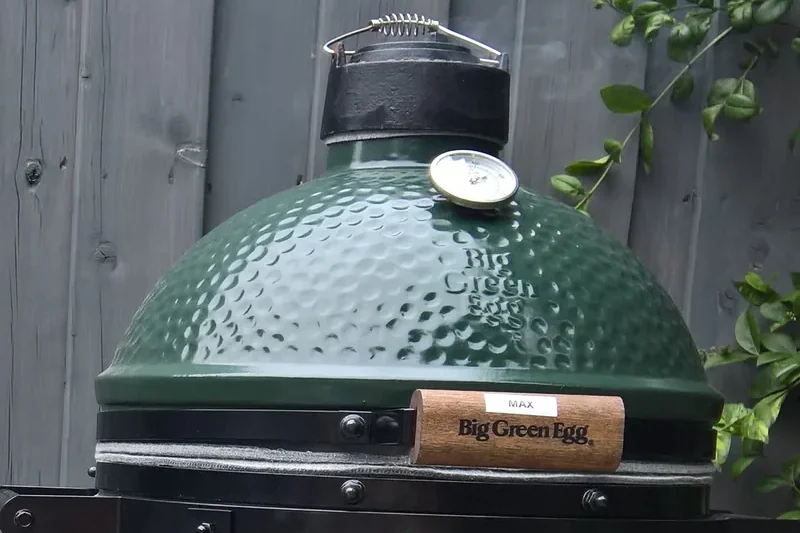
How long does a Big Green Egg actually last outdoors in Mediterranean climates?
The ceramic is very durable. Metal parts such as the hinge, handle and grids can be replaced over the years.
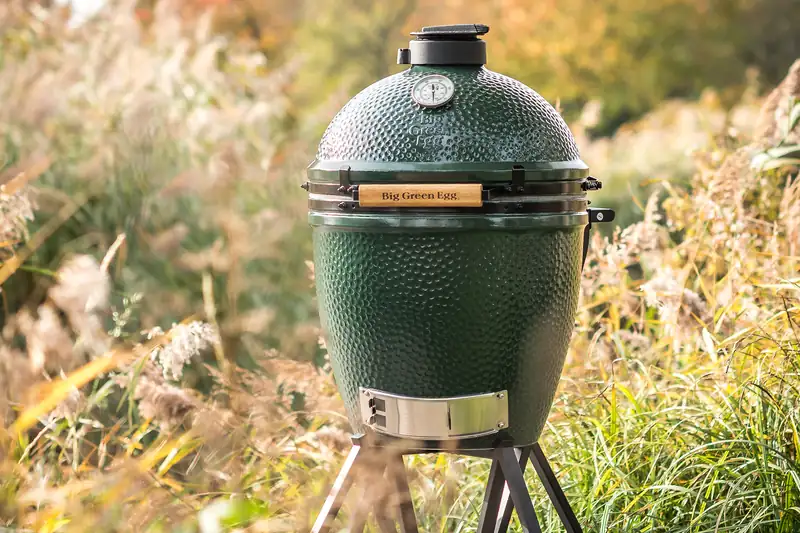
Is smoking really impossible on gas systems?
Functional smoking is theoretically possible using offset smoke boxes or wood chips, but temperature control becomes difficult. True smoking (low temperature, sustained exposure to smoke, indirect heat) depends on thermal mass and precise oxygen control, ceramics excel, gas systems struggle. If smoking matters to you, kamado is essential.
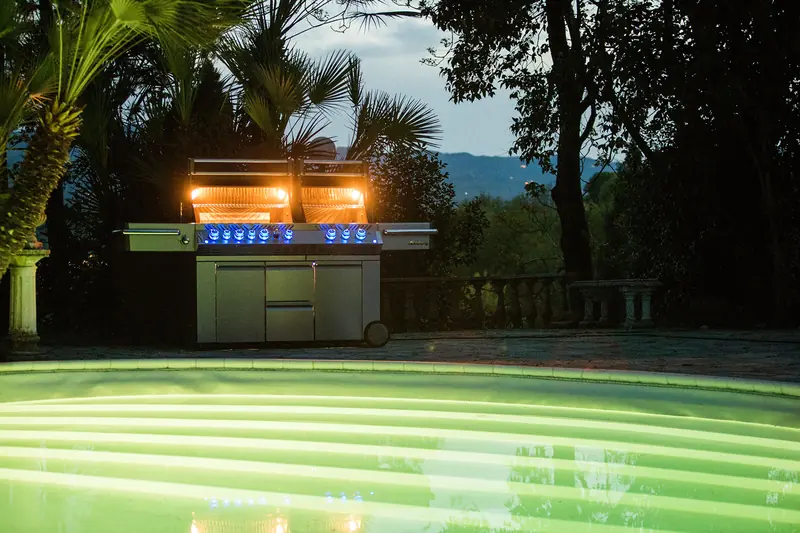
What’s the learning curve for temperature control on a Big Green Egg?
Expect the first few cooks to be a learning exercise. After that the vents become second nature: more air, more heat. Gas systems have zero learning curve; this represents the convenience trade-off.